
In the previous post, we took a look, albeit a twisted one, at a famous painting. Next, I thought, why not put the painter in the limelight? (Note that these images were not made today — I am working through a loooong backlog in my OpenAI history.)
So I told DALL-E to do this:
Me: Create a photo of the studio of a painter, in Mexico in the early 20th century. The painter is at work in the middle of the room. The painter is a young woman, in an attire matching early-20th-century Mexico. Light is coming from the right, through a large French window.
Wait — why not have the painter as a painting?
Me: Re-create the image in the style of an early-20th-century Mexican painting.
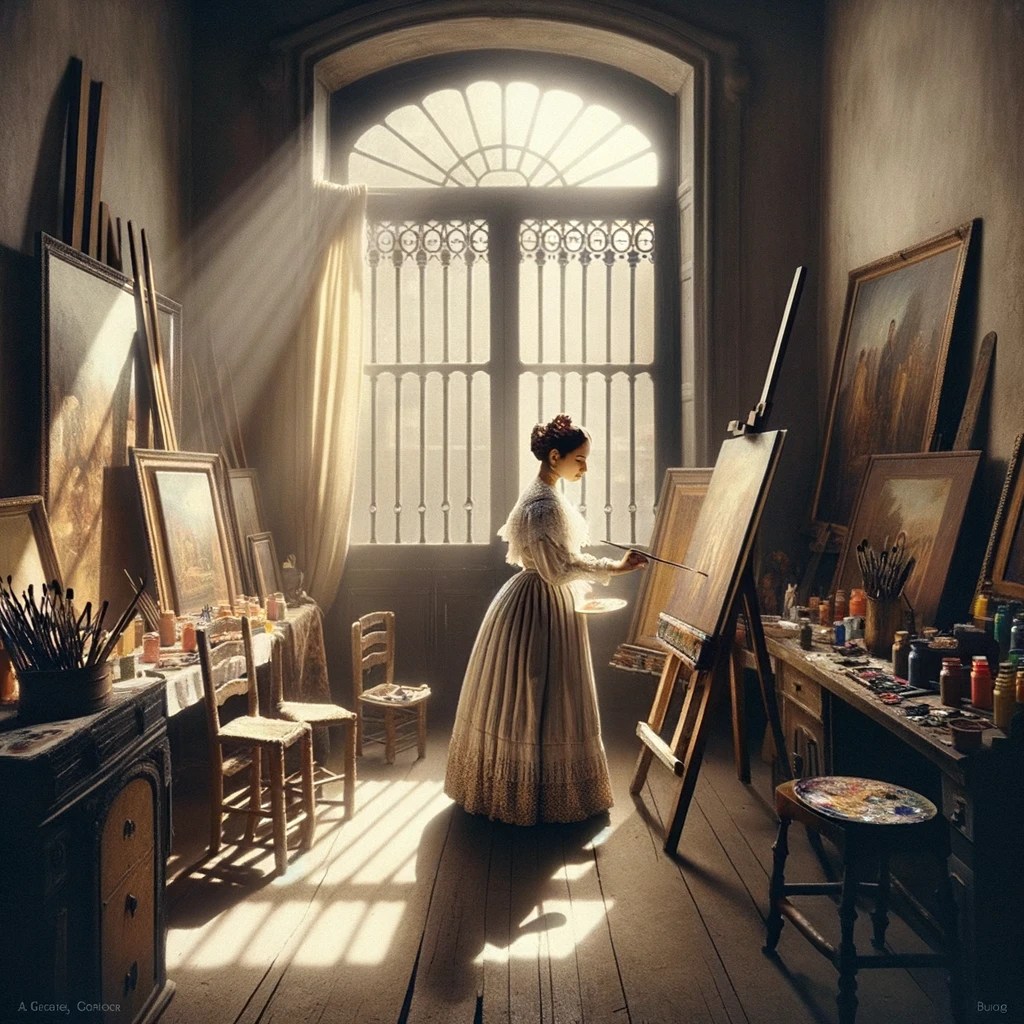
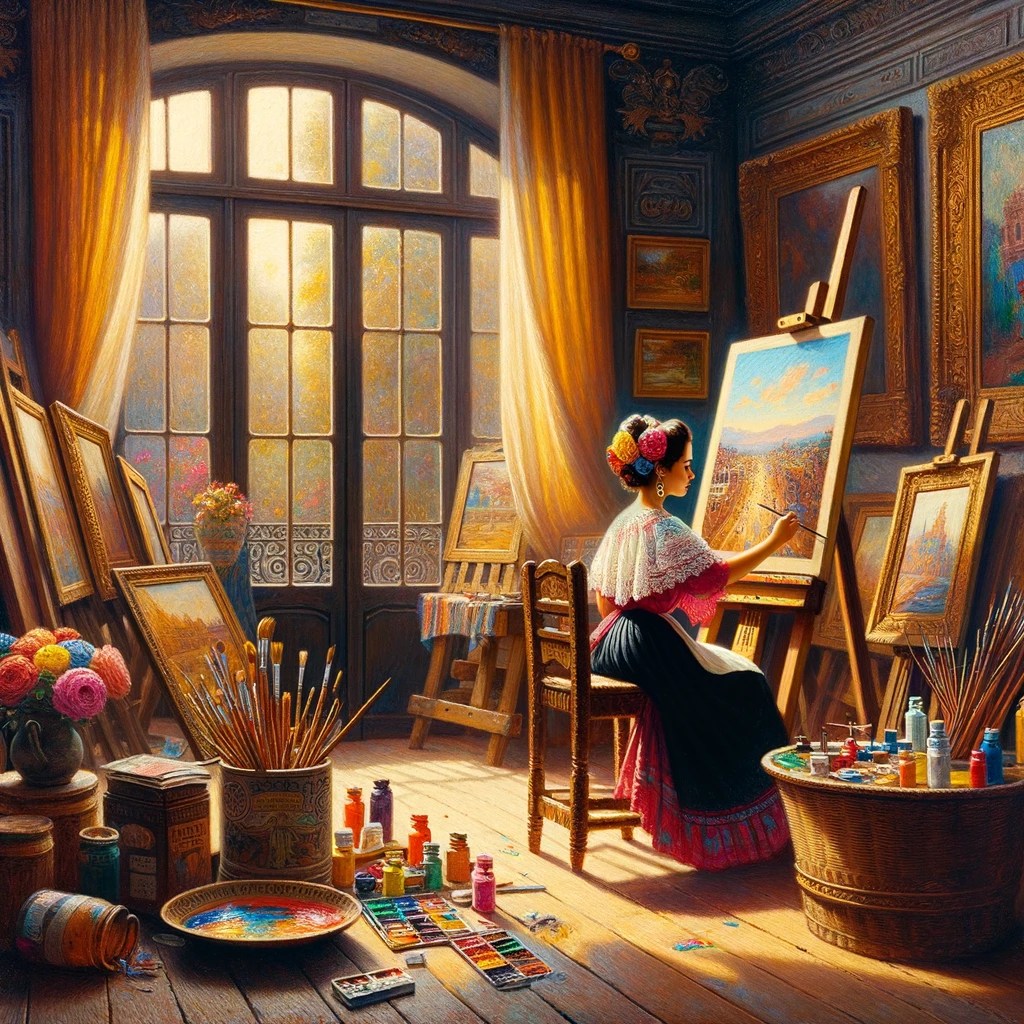
Remember, I said earlier that DALL-E doesn’t know right from left. Strangely enough, the light does come from the right. Whether the French window should be on the right or where it actually is, isn’t clear from the prompt. I can’t blame that on the AI.
On the second image, DALL-E must have said, directions be damned. Also note how I didn’t say “Frida Kahlo’s style” because I was afraid of DALL-E scolding me for wanting it to mimic an actual person.
Now my dialog with the AI traveled ahead in time:
Me: Re-create the image to show a modern teenage girl’s room with a lot of clutter. The painter is a teenage girl.
Then:
Me: Re-create the image as a black-and-white drawing.
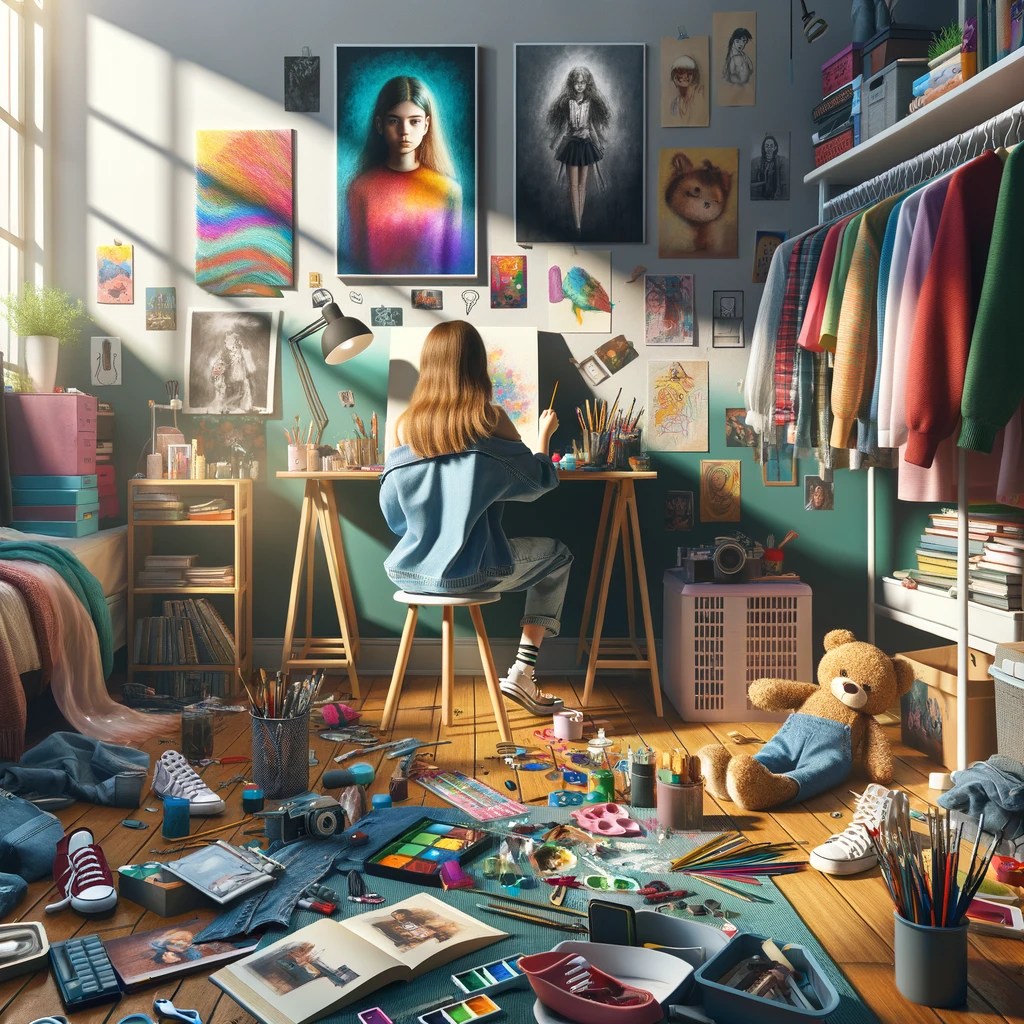
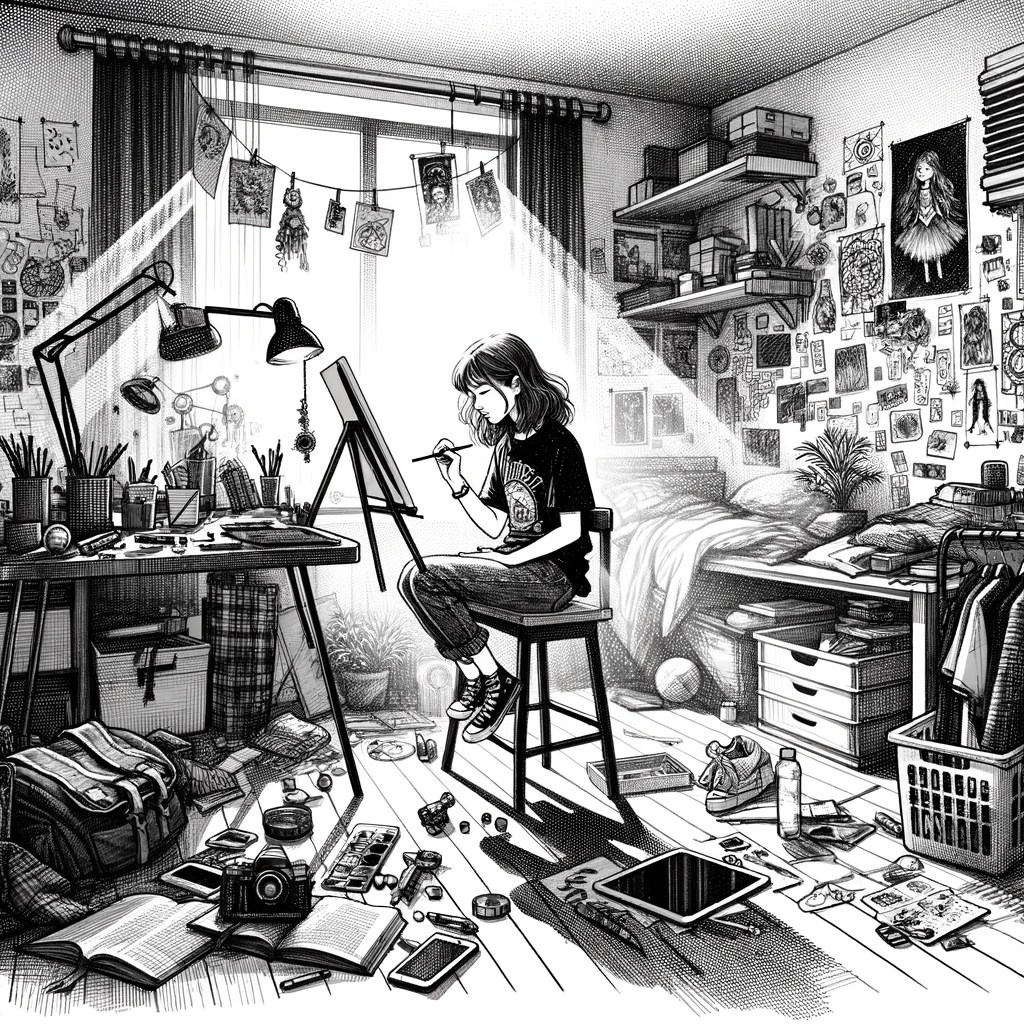
Here, I must have exercised self-censorship again: I didn’t say “pencil drawing” because I knew DALL-E couldn’t imagine a pencil drawing without the pencil.
Then I thought, let’s get professional:
Me: Re-create the image to show the studio of a young professional painter. The studio is very modern and organized.
Me again: Can you make the painter a young woman?
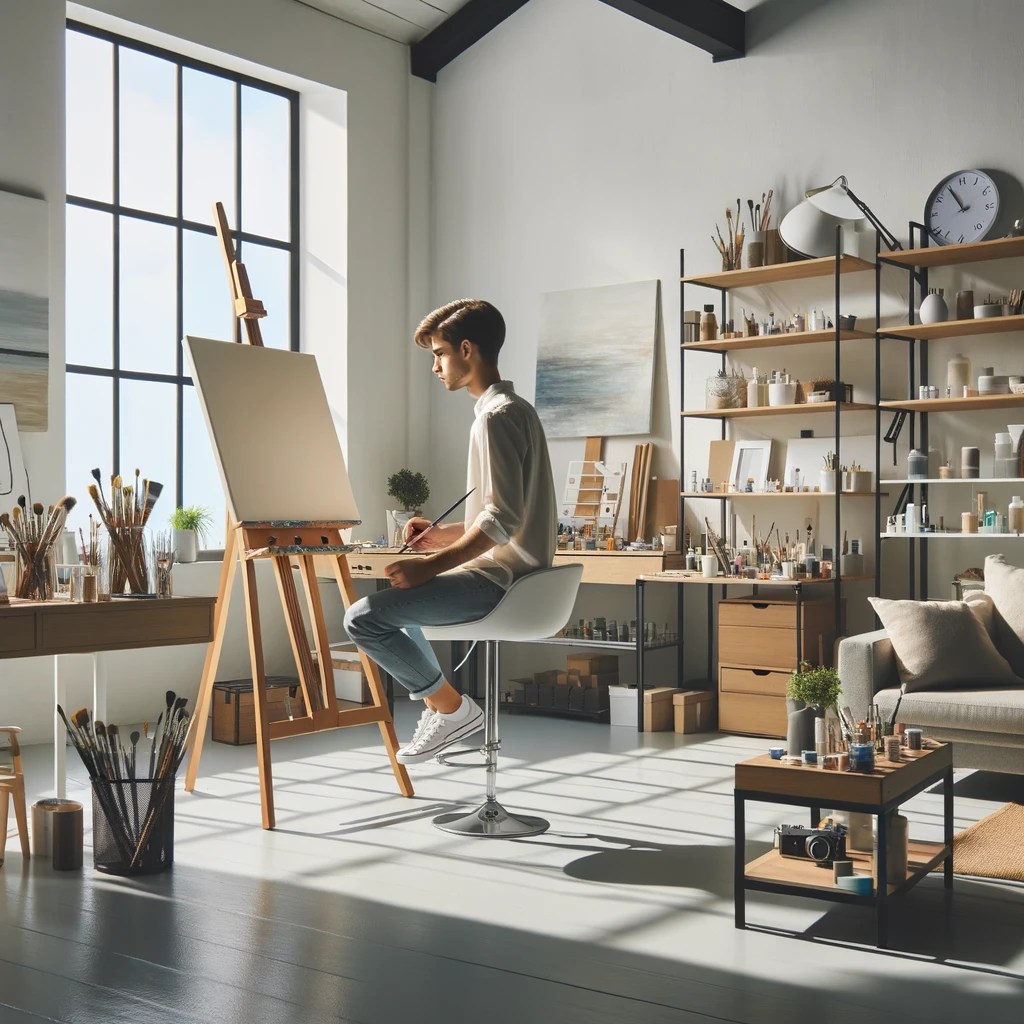
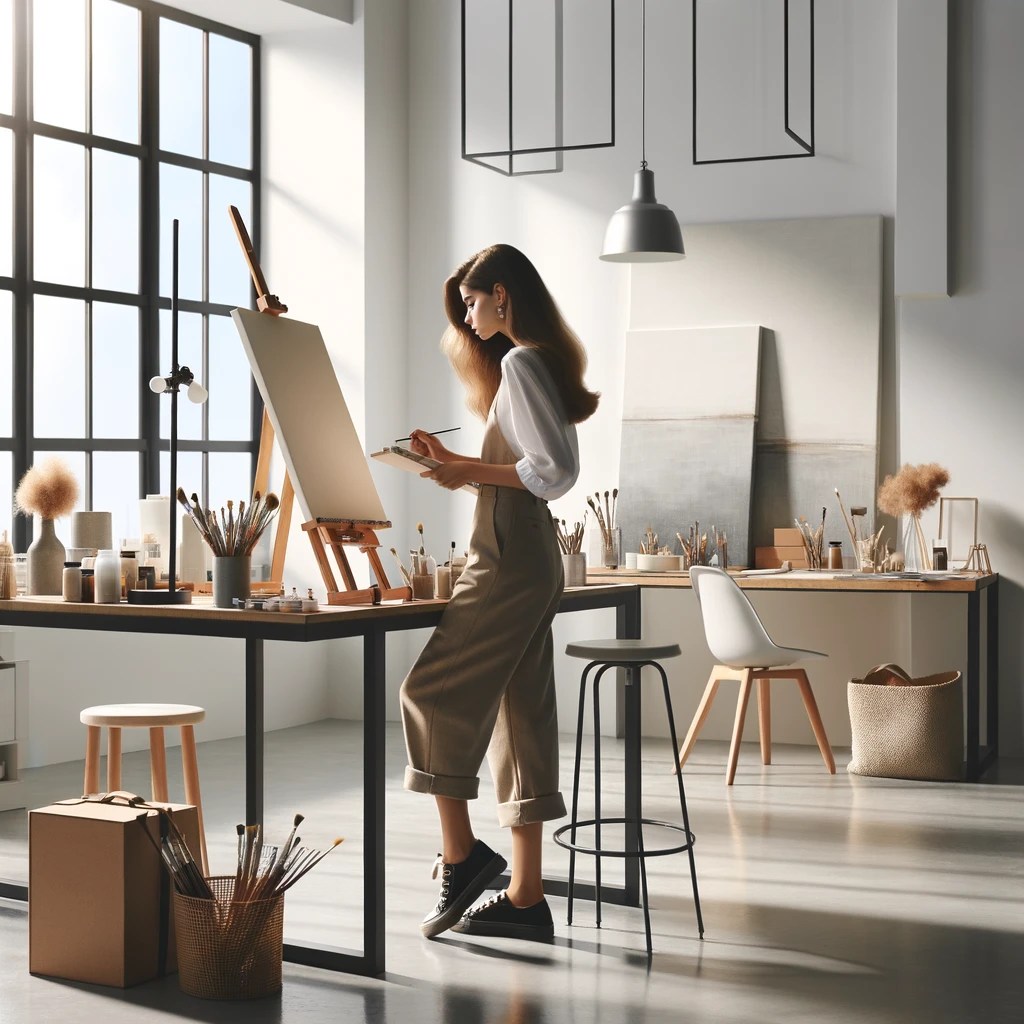
Did you notice the prejudice here? The moment I said “professional”, the painter changed into a male. I had to nudge DALL-E to come to its senses. The training bias is somewhat subtle but it’s there.
 thirdtower.ai