
The original Star Trek speech has “no man”, and we know this wasn’t meant to be gendered at the time it was written — but inclusive speech looks different today.
Anyway, I wrote earlier that I am as big a sci-fi nerd as they get, and DALL-E is a great environment to visualize these strange new worlds where no-one can ever go. And here you can go as insane as you wish:
Me: Create a photo of a beach on an alien planet, with blue sand and light purple sky, with several futuristic aircraft in the air. There are small bright red balls in the sand.
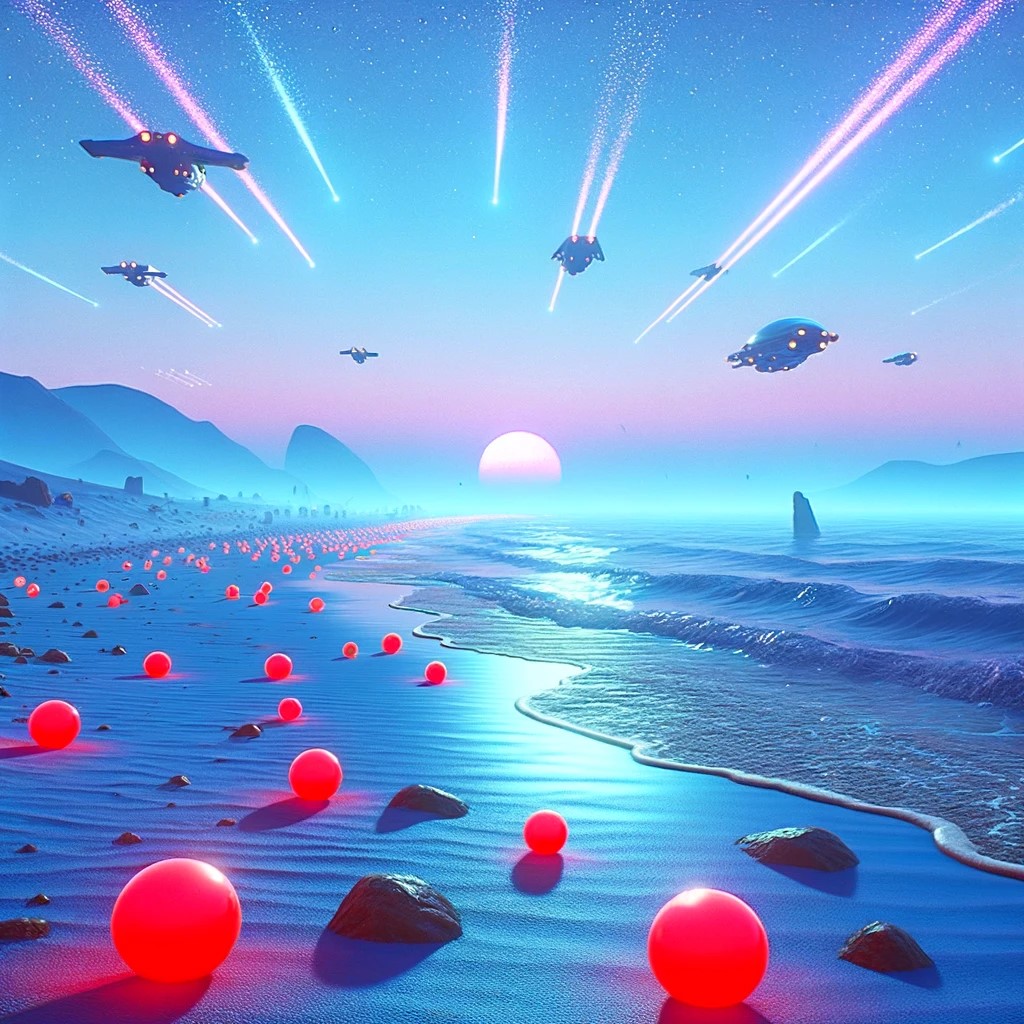
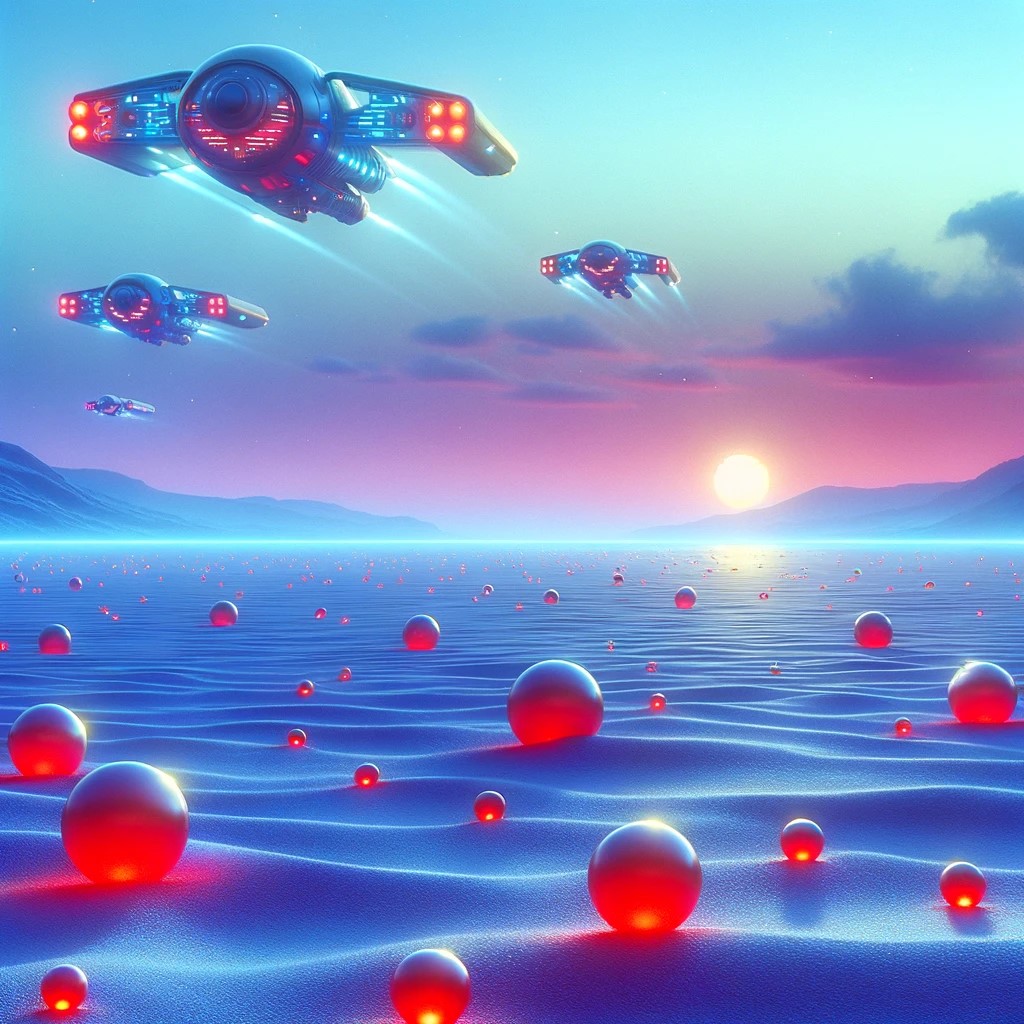
(Do alien places have beaches at all?)
I like dark scenes, so I asked DALL-E to imagine this beach at night:
Me: Can you remove the sun and make the scene darker? The purple light should come from below the horizon.
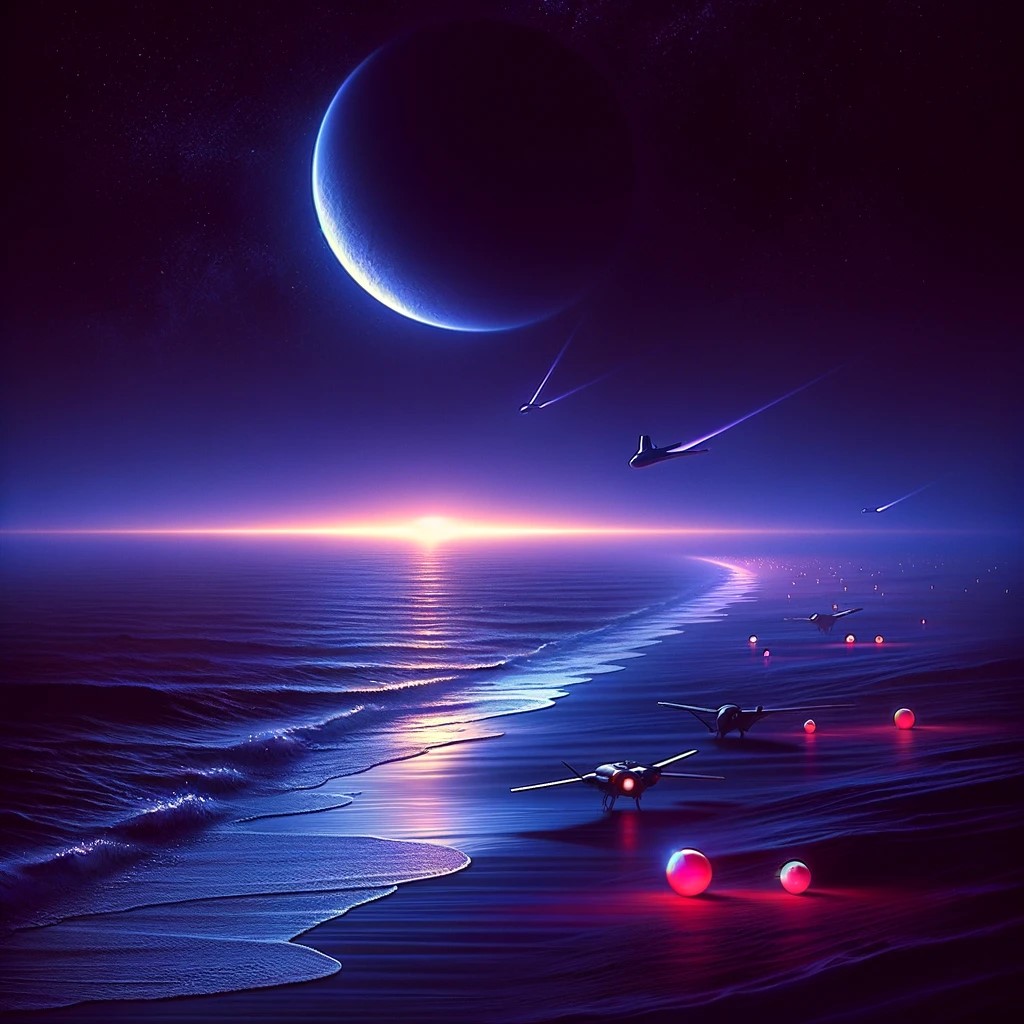
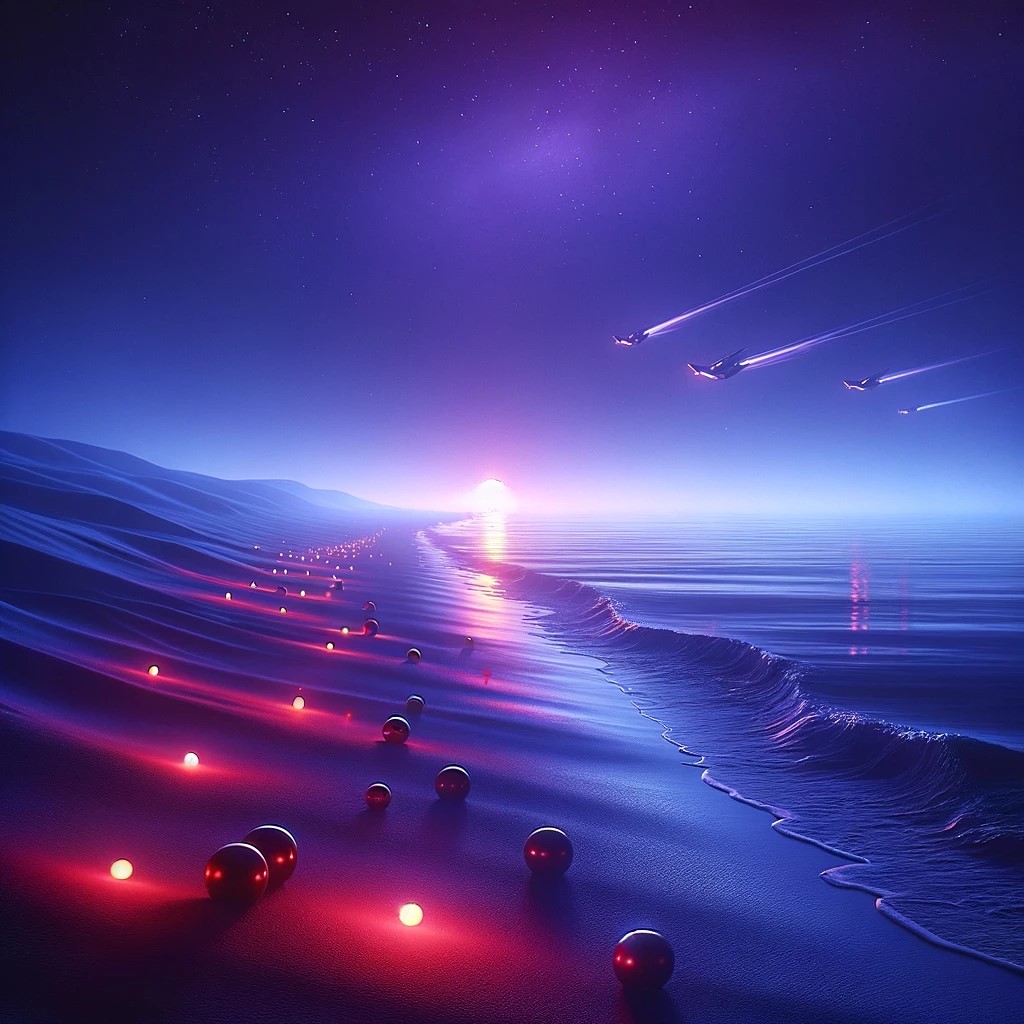
At this point, I usually let my imagination go out of hand (I’m not talking about DALL-E’s because it hasn’t got one).
Me: Replace the aircraft with flying black alien squirrels.
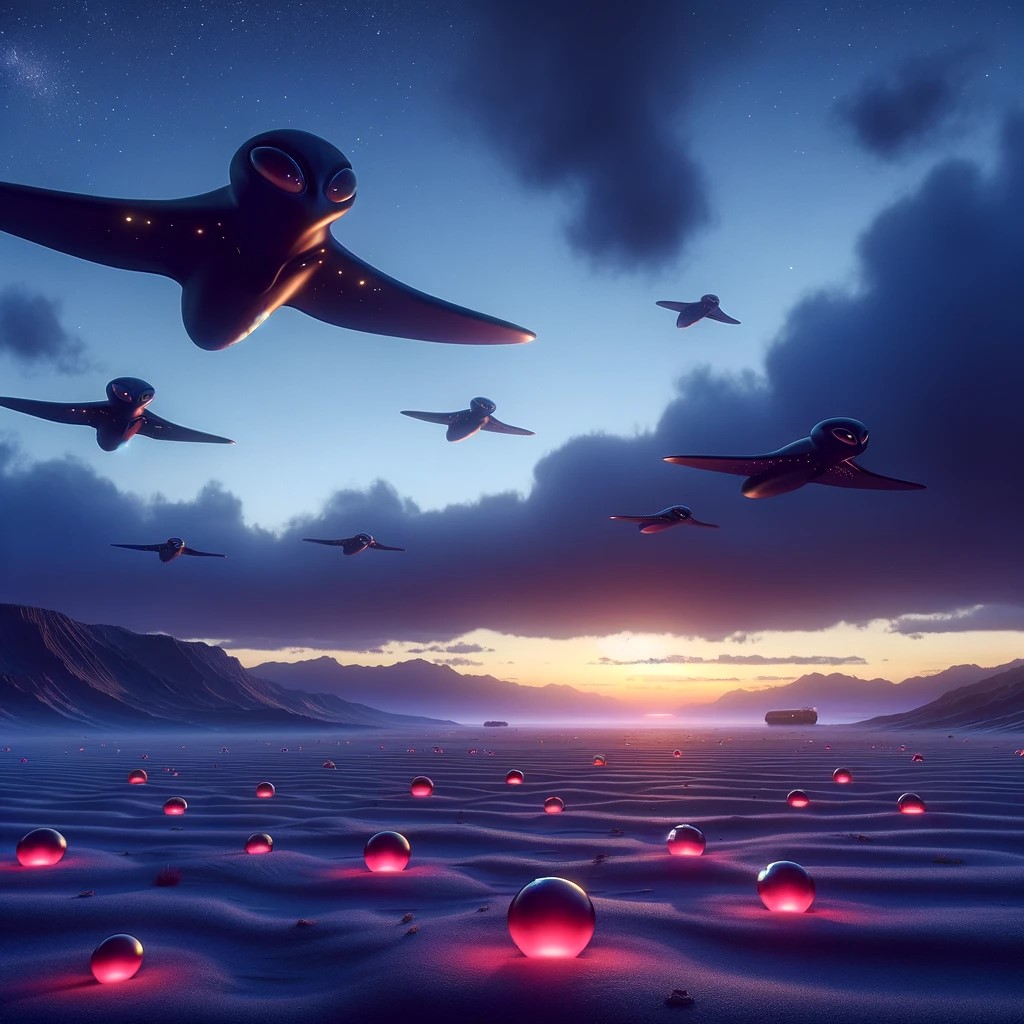
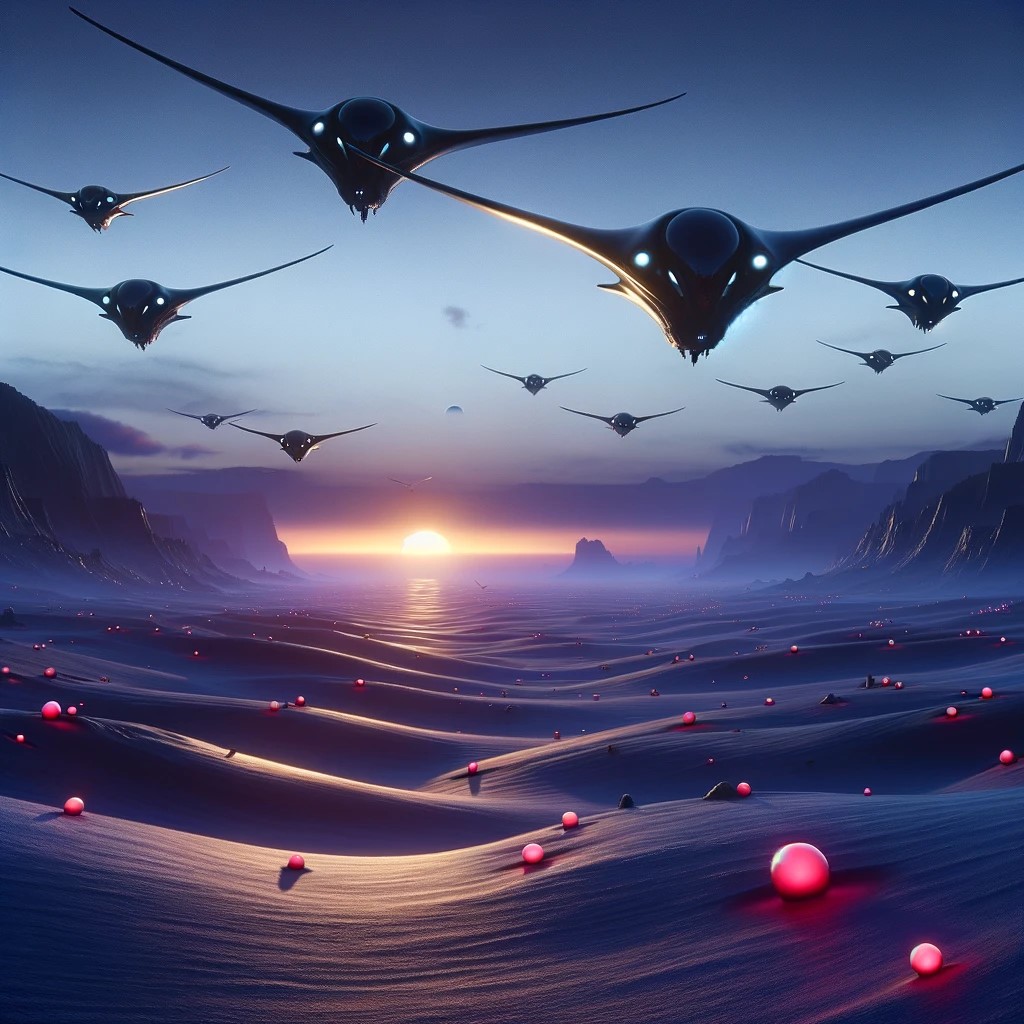
At this point DALL-E guessed, probably correctly, that a “flying black alien squirrel” can be just about anything.
The final twist is proof that DALL-E cannot reference individual parts or objects on an image:
Me: Replace the red balls with little bright red birds.
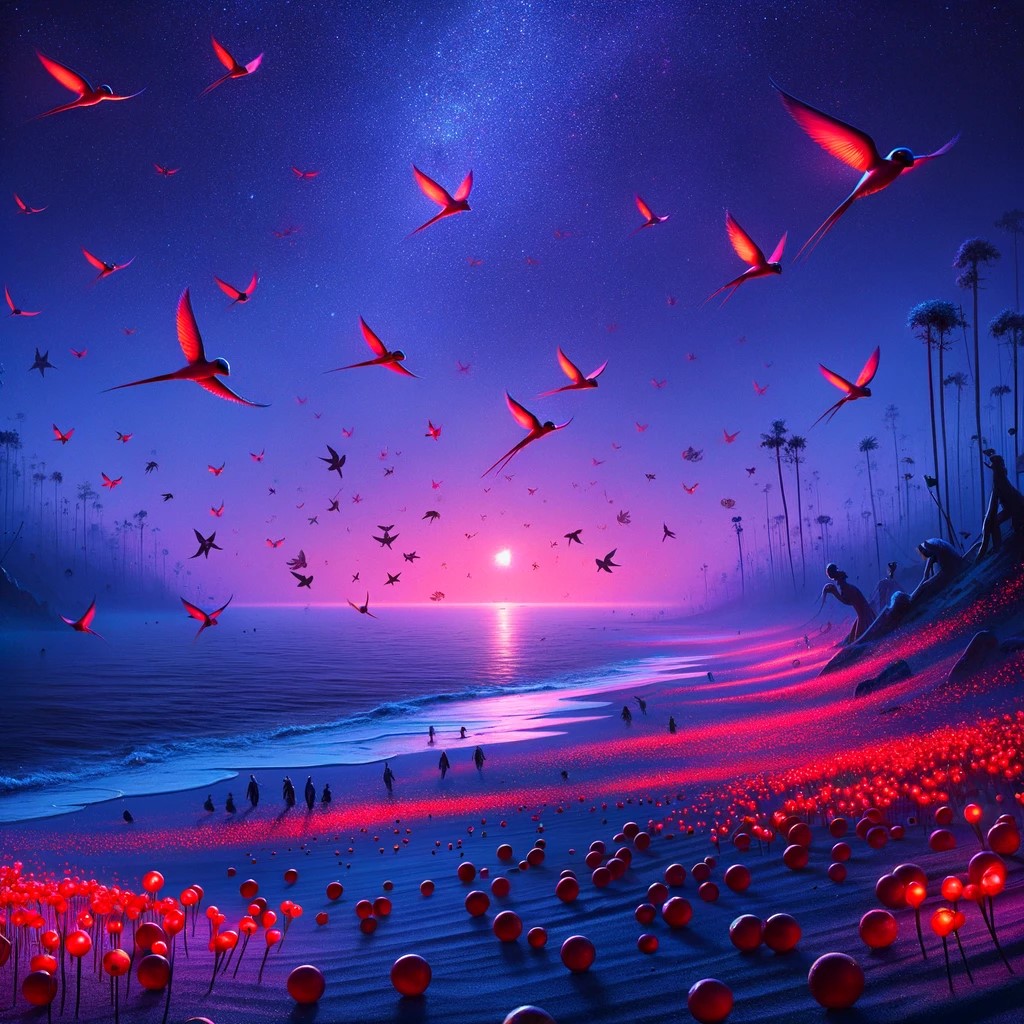

DALL-E replaced… the “flying black alien squirrels” with the birds, and the red balls with… flowers that look like red balls, or, on the second image, hairy red balls.
The moral of the story is that for DALL-E, there is no accurate identification of the objects on an image. Which means it is impossible to make incremental changes without side effects, that is, without also altering other parts of the image.
 thirdtower.ai